

Recruitment agencies are no longer judged solely by their network, phone calls, or ability to fill vacancies quickly. Before an employer shares a hiring requirement or a candidate submits a CV, both are likely to assess the agency online. They look at its website, specialist knowledge, job visibility, social presence, and overall credibility.
That is why digital marketing for recruitment agencies has become an important part of sustainable growth. A strong digital presence helps recruitment firms attract hiring companies, engage suitable candidates, and build trust in competitive markets. However, successful recruitment marketing is not simply about posting vacancies or running advertisements. It requires a strategy that recognises two separate audiences: employers seeking recruitment support and candidates seeking opportunities.
What Is Digital Marketing for Recruitment Agencies?
Digital marketing for recruitment agencies involves using online channels such as SEO, website content, social media, email marketing, and paid advertising to connect recruitment firms with employers and candidates. For employers, the goal is to show expertise, industry understanding and the ability to source the right talent. For candidates, the goal is to make opportunities easy to discover while presenting the agency as credible, responsive, and professional.
Why Recruitment Agencies Need Two Marketing Funnels
Many recruitment firms make the mistake of speaking to every website visitor in the same way. In reality, an employer seeking a specialist recruitment partner has very different needs from a candidate seeking a new role.
An employer may search for:
- A specialist recruiter within a particular industry.
- Recruitment support in a specific city or region.
- Executive search, contract staffing or temporary hiring solutions.
- Evidence that an agency understands hiring challenges.
A candidate may search for:
- Available jobs within a sector.
- Career advice, interview preparation, or salary guidance.
- A trustworthy recruitment agency with suitable opportunities.
- A simple way to register or submit a CV.
For recruitment agencies, this means digital visibility must be supported by trust. Traffic alone is not enough; the website and content must make both employers and candidates feel confident taking the next step.
1. Build a Recruitment Website That Converts Visitors
A recruitment agency website should immediately show who the agency helps, which sectors it serves, and how visitors can take the next step. A general homepage alone is often not enough. Employers and candidates need different information.
For example, a healthcare staffing agency may need one page explaining its staffing support for care providers and another area where healthcare assistants can view opportunities or submit their details. This makes the website more relevant for both audiences and reduces confusion.
A recruitment website should also work smoothly on mobile devices. Candidates often browse vacancies or open recruiter messages on their phones, while employers may visit an agency page after seeing a LinkedIn post or email. Clear buttons, short forms, and readable pages make it easier for those visitors to respond.
2. Use SEO to Capture Recruitment Demand
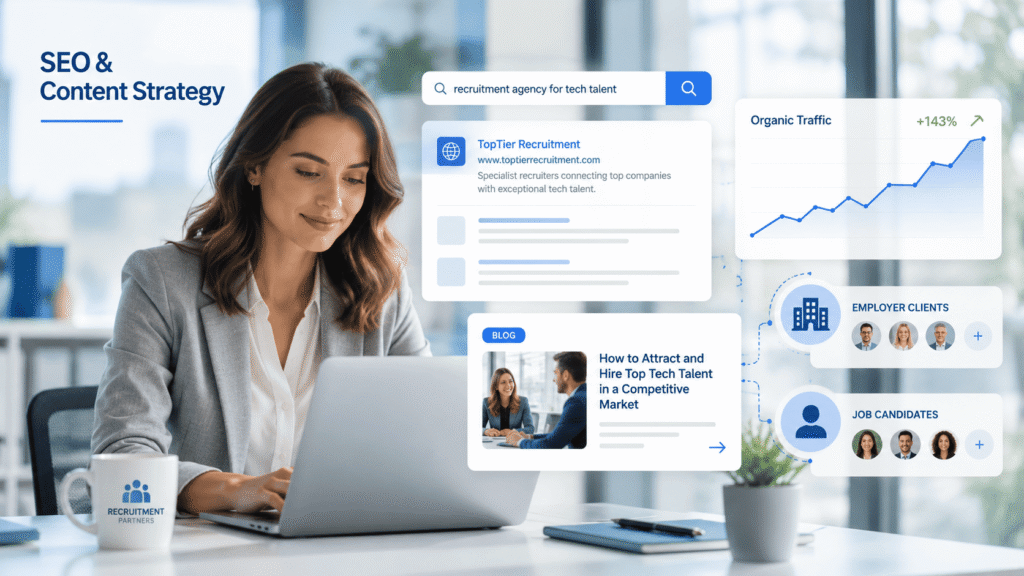
SEO for recruitment agencies helps a firm appear when someone is already searching for recruitment support or employment information. This makes search visibility valuable because visitors often have a clear reason for searching.
An employer may search for a construction recruitment agency in a specific city, an executive search partner for finance roles, or temporary healthcare staffing support. A candidate may search for industry-specific jobs or guidance about progressing within a chosen career. To reach these searches, a recruitment agency needs pages built around real services, sectors, and locations rather than generic marketing language. A specialist recruitment firm could publish a service page for employer inquiries, a sector page explaining its industry knowledge, and helpful articles that answer the questions its audience regularly asks.
Keywords are important, but useful content matters more than repetition. A page that clearly explains a recruitment service, shows knowledge of the market, and makes contact easy is more helpful than one that simply repeats the same search phrase.
3. Publish Content That Builds Recruitment Authority
Content gives a recruitment agency the opportunity to demonstrate its knowledge before a sales conversation begins. This is particularly important for specialist recruiters, where employers may prefer an agency that understands the challenges of hiring within their sector. Useful content for employers may address hiring difficulties, salary expectations, recruitment processes, or ways to reduce delays in filling key roles. For candidates, useful content may include interview preparation, CV guidance, workplace expectations, or career development advice.
For example, a recruitment firm working with construction businesses could publish an article about hiring skilled tradespeople during busy project periods. That article is more valuable than a general post about recruitment because it speaks directly to a real employer concern. This kind of content supports more than search visibility.
4. Stay Visible on LinkedIn and Social Media
Social media can help recruitment firms stay top of mind with employers and candidates between direct conversations. For many agencies, LinkedIn is especially useful because it brings together business owners, hiring managers, professionals, and job seekers.

However, social media marketing for recruiters should not be limited to posting vacancies. A feed composed entirely of job advertisements may help fill immediate roles, but it does not clearly communicate the agency’s expertise. A stronger approach is to combine relevant job opportunities with insights from the recruitment market. When content is consistent and useful, the agency becomes more recognisable and more credible over time.
The aim is not to post constantly. It is to publish information that reflects the work the agency genuinely understands and the audiences it wants to reach.
5. Use PPC Advertising for Faster Visibility
SEO and content marketing usually support long-term growth, but there are situations where a recruitment firm may need faster visibility. PPC for recruitment agencies can help promote priority services, urgent staffing support, or high-demand roles to a targeted audience. The most important part of paid advertising is matching the advertisement to the visitor’s needs. An employer searching for temporary warehouse staff should reach a staffing support page, not a general jobs page. Similarly, a candidate campaign should lead to relevant vacancies or a simple registration process.
For example, an agency responding to urgent demand for healthcare workers could run a focused campaign for care providers needing temporary staffing. A dedicated landing page can explain the service clearly and encourage employers to request support.
Paid advertising should be measured by meaningful results, such as genuine inquiries, candidate registrations, or calls from relevant employers, rather than clicks alone.
6. Use Email Marketing to Nurture Relationships
Recruitment decisions do not always happen immediately. An employer may not need support this week but may require a recruitment partner later in the year. A suitable candidate may not be ready to move roles today but could be interested in a future opportunity.
Email marketing helps recruitment agencies stay more directly connected with these audiences. Employer contacts may value occasional market insights, hiring guidance, or updates about specialist recruitment support. The communication should remain relevant. A better approach is to separate employers and candidates, and, where possible, organise communication by industry or interest.
Used carefully, email not only promotes services. It keeps the agency visible when the right opportunity to work together eventually appears.
Digital Marketing Channels Compared for Recruitment Agencies
| Channel | Main Purpose | Best Suited For | Typical Measure of Success |
| SEO | Build long-term search visibility | Employer enquiries and candidate discovery | Organic enquiries, rankings, registrations |
| Content Marketing | Establish expertise and trust | Specialist recruitment positioning | Engagement, leads, assisted enquiries |
| Social Media | Build visibility and relationships | LinkedIn audiences and candidate engagement | Reach, engagement, enquiries |
| PPC Advertising | Generate faster targeted traffic | Priority services or urgent campaigns | Cost per lead, conversions |
| Email Marketing | Nurture existing contacts | Employers and registered candidates | Opens, replies, enquiries, applications |
Common Recruitment Marketing Mistakes to Avoid
A digital marketing strategy becomes less effective when it lacks focus. Common mistakes include:
Speaking to Employers and Candidates in the Same Way
Both audiences matter, but they require different pages, messages, and calls to action.
Publishing Generic Content
Broad career tips may attract attention, but specialist insight is more likely to establish authority and support client conversations.
Sending Every Visitor to the Homepage
Dedicated landing pages usually communicate a service, sector, or campaign more clearly than a general homepage.
Measuring Visibility Without Measuring Leads
Traffic and impressions are useful indicators, but recruitment agencies ultimately need employer conversations, suitable candidates, and measurable opportunities.
Using Digital Channels Without a Clear Position
Marketing becomes stronger when an agency clearly communicates the industries, roles, or hiring challenges it understands best.
Build a Stronger Recruitment Marketing Presence
Digital marketing for recruitment agencies works best when it is built around trust, relevance, and measurable action. Recruitment firms need more than visibility; they need a digital presence that shows expertise to employers and creates a professional experience for candidates.
Webix Solutions supports businesses with SEO and AI visibility, website design and development, content strategy, social media management, and paid advertising. For recruitment agencies seeking stronger online visibility and more qualified opportunities, a focused digital marketing strategy can turn expertise into measurable growth.
Frequently Asked Questions
1. Does SEO work for recruitment agencies?
SEO can help recruitment agencies become visible when employers search for recruitment services or candidates search for opportunities and advice.
2. Which digital marketing channel should a recruitment agency start with?
The starting point depends on the agency’s goals. A recruitment firm seeking long-term visibility may prioritise website improvements, SEO, and content. An agency needing faster inquiries may also use PPC campaigns supported by focused landing pages.
3. How can recruitment agencies attract more employer clients online?
Recruitment agencies can attract employer clients by publishing sector-specific insight, improving service pages, building LinkedIn visibility, using targeted paid advertising, and making it simple for employers to contact the agency.
4. What type of content should a recruitment agency publish?
A recruitment agency should publish content that answers real questions from employers and candidates. This may include hiring advice, salary insights, sector recruitment, and challenges.
5. Can digital marketing help specialist recruitment firms compete with larger agencies?
Yes. A specialist recruitment firm can use digital marketing to show focused expertise in a particular sector or type of hiring. Clear sector pages, helpful content, and targeted campaigns can help a smaller agency stand out for searches where specialist knowledge matters.