
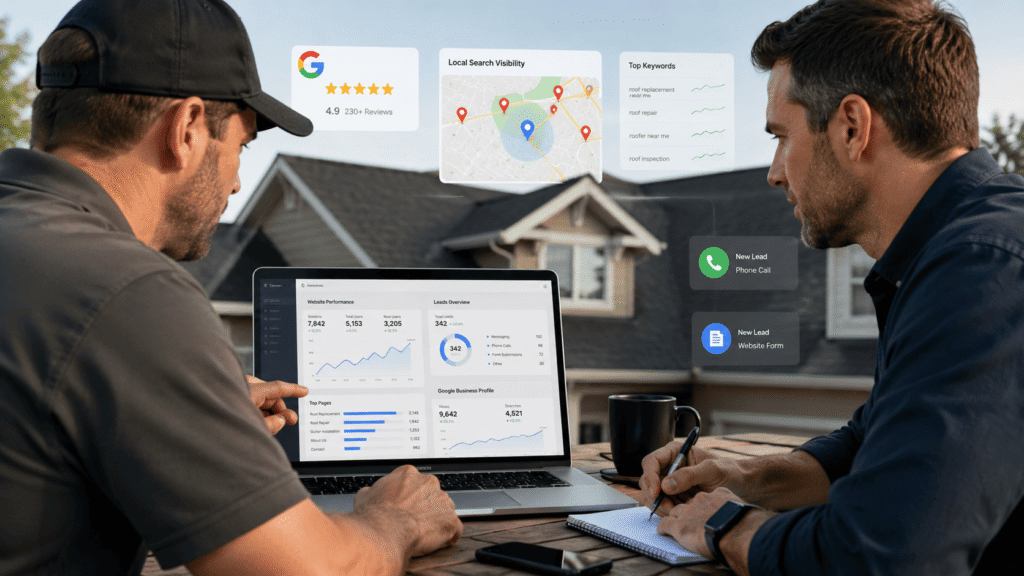
Digital marketing for roofers is the process of using online channels like SEO, Google Business Profile, paid ads, reviews, content, and website optimization to help roofing companies appear in local searches and turn visitors into roofing leads. In 2026, roofing customers are not only asking friends for referrals. They are searching on Google, checking map listings, reading reviews, comparing websites, and looking for proof before requesting a quote. A roofing company without a strong online presence can lose high-intent leads to competitors that appear more visible, more trusted, and easier to contact.
A strong digital marketing strategy helps roofers get found, build trust, and convert online searches into phone calls, quote requests, inspections, and booked jobs.
Why Roofing Companies Need Digital Marketing in 2026
Roofing is a local and trust-based service. Most homeowners search online when they need roof repair, roof replacement, storm damage repair, or emergency roofing help. These searches often come with strong buying intent.
For example, someone searching “emergency roof repair near me” is usually not looking for general information. That person needs fast help from a local roofing contractor.
Digital marketing helps roofing companies:
- Appear in local search results
- Get more calls and quote requests
- Build trust through reviews and project photos
- Promote roof repair and replacement services
- Compete with other local roofing contractors
- Track which marketing channels generate real leads
The goal is not only to get website traffic. The real goal is to get qualified roofing leads from homeowners who are ready to take action.
Build a Roofing Website That Converts Visitors Into Leads
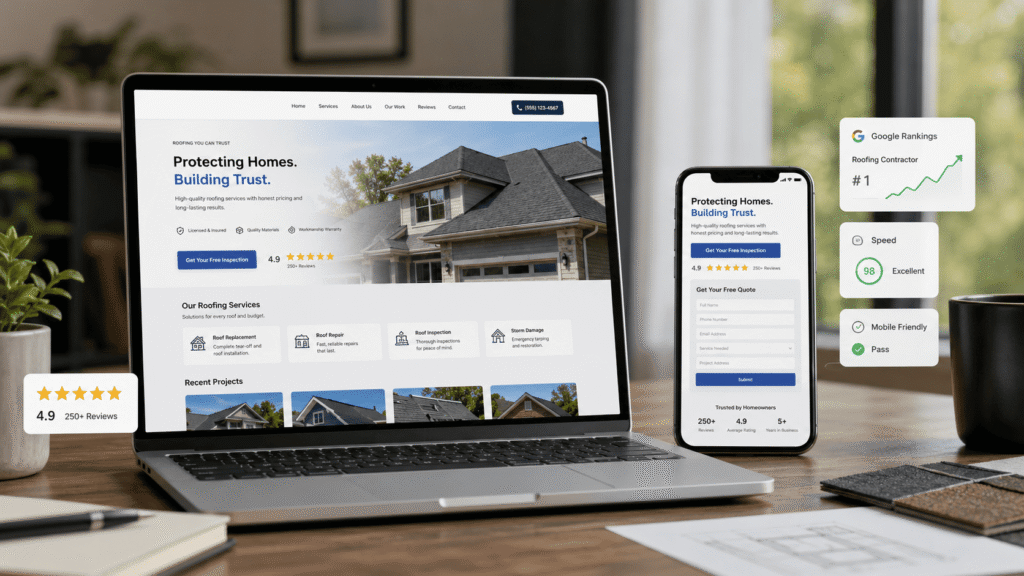
A roofing website should be more than an online brochure. It should work like a lead-generation tool.
When a visitor lands on the website, they should quickly understand what services the company offers, where it works, why it can be trusted, and how to contact it.
A strong roofing website should include:
- Clear service pages
- Fast mobile loading speed
- Click-to-call buttons
- Simple quote request forms
- Real project photos
- Customer reviews
- Licenses and insurance details
- Service-area pages
- Emergency roof repair information
- Clear calls to action
Each major roofing service should have its own page. For example, a roofing company should not place roof repair, roof replacement, flat roofing, metal roofing, and storm damage repair on a single short page. Separate pages help users find the right service and help search engines understand the website better.
Local SEO for Roofers
Local SEO for roofers is one of the most important parts of roofing marketing. Roofers usually serve specific cities, towns, or service areas, so the business needs to appear when people search for local roofing services.
Important local roofing keywords include:
- roof repair near me
- roofing contractor near me
- roof replacement in [city]
- emergency roofer in [city]
- storm damage roof repair
- metal roofing contractor
- flat roof repair near me
To improve local SEO, a roofing company should create optimized service and location pages, as well as helpful content focused on real homeowner problems. These pages should be written naturally and should not repeat the same text with only the city name changed.
A good service-area page should explain the roofing service, common roofing problems in that area, the company’s process, trust signals, and a clear contact option.
Google Business Profile Optimization for Roofers
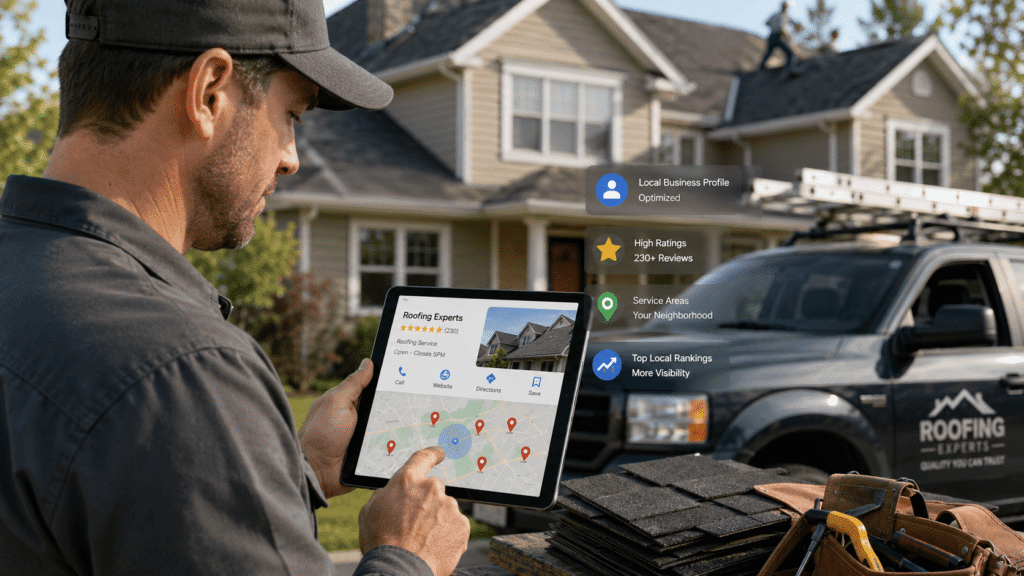
Google Business Profile is very important for roofing companies because many homeowners choose a contractor directly from Google Maps or local search results.
A roofing company should keep its profile complete and active with:
- Correct business name, phone number, and website
- Accurate service areas
- Roofing-related business categories
- Updated working hours
- Roofing service listings
- Project photos
- Review responses
- Posts about services, offers, or seasonal roofing tips
The profile should not be treated as a one-time setup. It should be updated regularly. Fresh photos, new reviews, and accurate service details can help the business look active and trustworthy.
Roofing SEO: Ranking for High-Intent Searches
Roofing SEO is the process of improving a roofing website so it can rank for search terms that potential customers use. The best roofing keywords are usually local, service-based, and problem-focused.
A roofing company should target keywords such as:
- roof repair
- roof replacement
- emergency roof repair
- storm damage roofing
- leaking roof repair
- commercial roofing
- residential roofing
- roofing contractor in [city]
The focus keyword should appear naturally in key places, such as the title, first paragraph, headings, meta description, image alt text, and conclusion. However, keyword stuffing should be avoided. A page that repeats the same keyword too many times can look unnatural and less helpful.
The best roofing SEO content answers real questions clearly. Homeowners want to know the cost, process, timeline, warning signs, material options, and what to expect before hiring a contractor.
Digital Marketing for Roofers and AI Search in 2026
Search is changing in 2026. Homeowners may see AI-generated answers, local recommendations, map results, traditional search results, videos, and review platforms before they even visit a website.
This means roofing companies need content that is clear, useful, and easy for both people and search engines to understand.
A roofing website should answer questions like:
- How much does roof repair cost?
- When should a roof be replaced?
- What are the signs of roof damage?
- What should homeowners do after a storm?
- How long does roof replacement take?
- Is metal roofing better than shingles?
Content that provides direct answers, clear explanations, and real roofing experience is more likely to build authority. This also helps users trust the company before contacting it.
Content Marketing Ideas for Roofing Companies
Content marketing helps roofing companies attract homeowners researching roofing issues. A helpful blog can bring traffic, support SEO, and build trust.
Good roofing blog topics include:
- Signs your roof needs repair
- Roof repair vs roof replacement
- How long does a roof last?
- Roof replacement cost guide
- What to do after storm damage
- Metal roof vs asphalt shingles
- How to choose a roofing contractor
- Seasonal roof maintenance checklist
Each blog should answer the question properly instead of giving thin or general information. Helpful content can position the roofing company as an expert and guide homeowners toward the next step.
Paid Ads for Roofing Companies
SEO is important, but it takes time. Paid ads can help roofing companies get faster visibility for urgent services.
Roofers can use:
- Google Ads
- Google Local Services Ads
- Facebook Ads
- Instagram Ads
- Retargeting ads
Paid ads work best for high-intent services such as emergency roof repair, storm damage repair, roof leak repair, and roof replacement.
A roofing ad should not send users to a weak or general page. It should send them to a focused landing page with a clear headline, phone number, short form, reviews, service details, and strong call to action.
Online Reviews and Reputation Management
Reviews are one of the strongest trust signals for roofing companies. A homeowner is more likely to contact a roofer that has strong reviews, professional responses, and proof of completed work.
Roofing companies should ask satisfied customers for reviews after every completed project. They should also respond to both positive and negative reviews professionally.
A strong review strategy includes:
- Asking for reviews at the right time
- Sending a direct review link
- Responding to every review
- Adding reviews to service pages
- Using real testimonials in marketing
- Handling complaints politely
Good reviews can improve trust, support local SEO, and increase the chance that a visitor becomes a lead.
Social Media Marketing for Roofers
Social media is useful for building trust and showing real work. Roofing is a visual service, so project photos and short videos can perform well.
Roofing companies can post:
- Before-and-after roof photos
- Short inspection videos
- Project progress updates
- Team introductions
- Customer testimonials
- Storm preparation tips
- Roof maintenance advice
The goal is not to post random content. The goal is to show experience, quality, and activity. A homeowner who sees real projects and happy customers may feel more confident contacting the company.
Lead Conversion: Turning Website Visitors Into Roofing Jobs
Traffic alone does not grow a roofing business. The website must convert visitors into leads.
A roofing website can improve conversion by adding:
- Click-to-call buttons
- Short quote forms
- “Request a Free Inspection” CTAs
- Emergency roofing CTAs
- Trust badges
- Financing information
- Project galleries
- Reviews near contact forms
- Fast response systems
Response time is also important. If a roofing company waits too long to reply, the customer may contact another contractor. Fast follow-up can make a major difference in lead conversion.
Track Roofing Leads, Not Just Traffic
A roofing company should measure marketing by leads, not only website visits. Traffic is useful, but calls, forms, inspections, and booked jobs are more important.
Important roofing marketing metrics include:
| Phone calls | Shows direct lead intent |
| Form submissions | Tracks quote requests |
| Google Business Profile clicks | Shows local search activity |
| Cost per lead | Measures paid ad performance |
| Lead-to-job conversion rate | Shows real business results |
| Review growth | Supports trust and local SEO |
Tracking helps a roofing company understand which channels are working and where to spend money.
30-Day Digital Marketing Plan for Roofers
Week 1: Improve the Website
Update service pages, add clear CTAs, improve mobile speed, add project photos, and simplify the contact process.
Week 2: Optimize Local SEO
Update Google Business Profile, check business information across directories, add service areas, and start collecting customer reviews.
Week 3: Publish Helpful Content
Create one or two useful blog posts on roofing topics, such as roof repair costs, signs of roof damage, or roof replacement timelines.
Week 4: Improve Lead Generation
Set up call tracking, review form submissions, test paid ads, and improve landing pages based on user behavior.
Turning Roofing Searches Into Booked Jobs
Digital marketing for roofers in 2026 should focus on visibility, trust, and lead conversion. A roofing company needs more than a basic website. It needs strong local SEO, an optimized Google Business Profile, helpful content, real reviews, paid ad support, and clear tracking.
A clean, focused strategy can help roofers appear in local search results, build homeowners’ trust, and convert online visitors into real roofing customers.
Need more roofing leads in 2026? Webix Solutions helps roofing companies build SEO, Google Business Profile, paid ads, and conversion-focused digital marketing strategies that turn local searches into real customers with a free consultation.
FAQ’s
What is the best digital marketing strategy for roofers?
The best strategy usually includes local SEO, Google Business Profile optimization, roofing service pages, reviews, paid ads, and a website designed to convert visitors into leads.
How can roofers get more local leads?
Roofers can get more local leads by ranking for local keywords, improving Google Business Profile, collecting reviews, creating service-area pages, and using clear calls to action on the website.
Is SEO important for roofing companies?
Yes. SEO helps roofing companies appear when homeowners search for roof repair, roof replacement, emergency roofing, and other local roofing services.
Should roofing companies use paid ads?
Yes. Paid ads can help roofers generate leads faster, especially for urgent services like emergency roof repair, storm damage repair, and leaking roof repair.
How often should roofers update their website?
A roofing company should update its website regularly with new project photos, reviews, service information, location pages, and helpful blog content.