
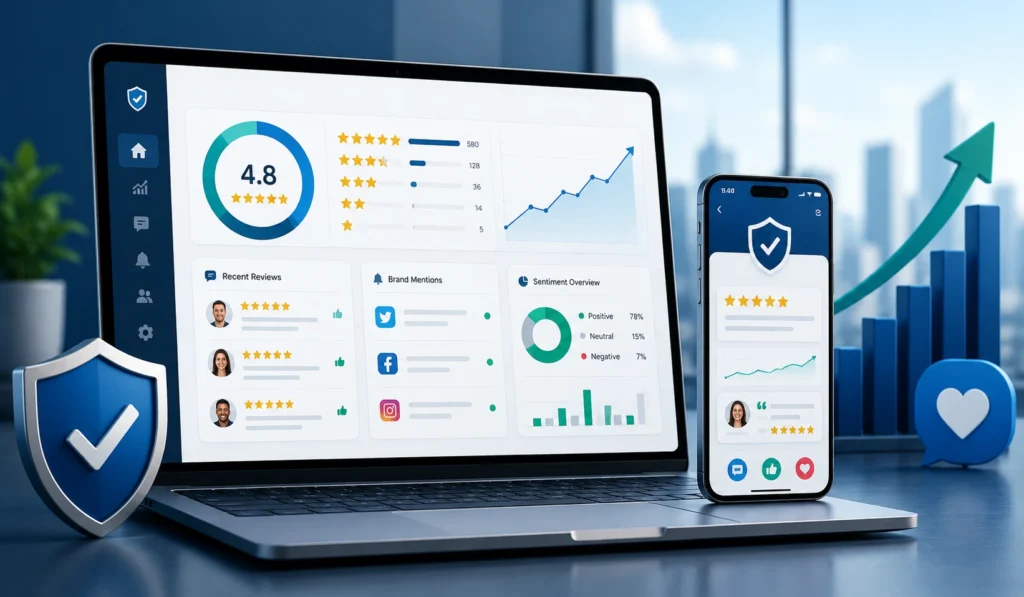
A business reputation is no longer shaped only by advertising, word of mouth or what happens inside a physical location. Search results, Google reviews, social media conversations, customer comments, news coverage and third-party websites can influence how a company is perceived before a potential customer ever makes contact.
This makes the benefits of online reputation management increasingly important for businesses that depend on trust. Online reputation management, often shortened to ORM, helps companies monitor how their brand appears online, respond to customer feedback, identify reputation risks and strengthen credible information surrounding the business.
When handled properly, ORM is not simply about dealing with negative reviews. It becomes a continuous process of understanding public perception and building a digital reputation that supports trust, customer acquisition and long-term brand growth.
Online Reputation Management Is More Than Damage Control
Many businesses first consider online reputation management services after discovering a negative review, damaging search result or public complaint. By that stage, however, a reputation problem may already be influencing potential customers.
A stronger ORM strategy begins before a crisis occurs. Reputation management generally involves three connected activities:
Monitoring what customers, search engines and online communities are showing or saying about the brand.
Protecting the business by identifying inaccurate information, reputation risks and unresolved customer concerns.
Strengthening the brand through credible reviews, accurate business information, authoritative content and professional customer communication.
This approach gives businesses a clearer picture of their reputation while creating opportunities to improve how the brand is perceived.
8 Benefits of Online Reputation Management for Businesses
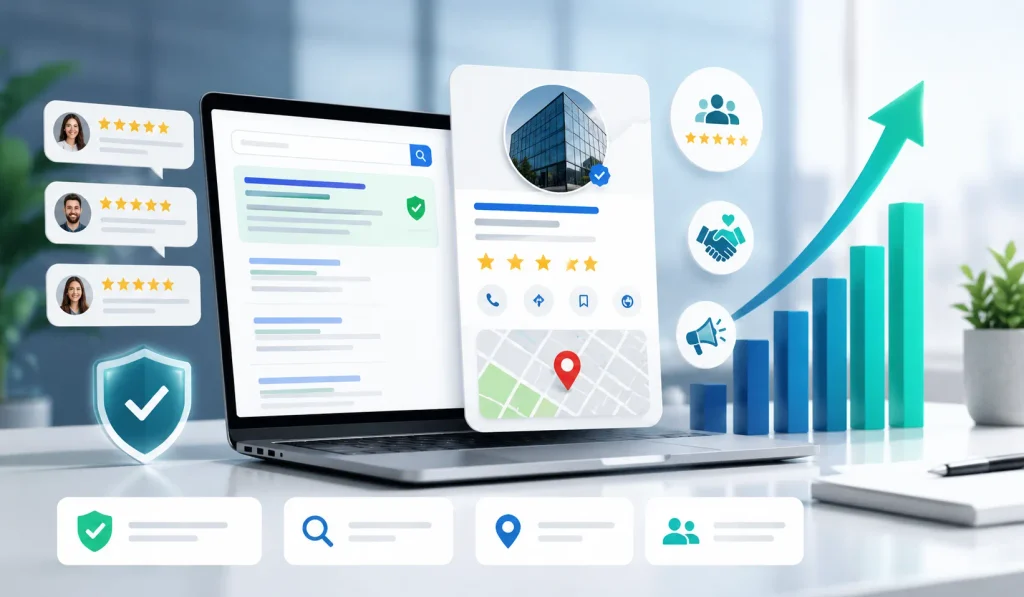
1. Reputation Monitoring Reveals What Customers Really Think
One of the most valuable online reputation management benefits is visibility into public perception.
Businesses may believe customers are satisfied while online conversations reveal recurring problems with communication, service quality, delivery times or customer support.
Reputation monitoring can include:
- branded Google searches
- Google Business Profile reviews
- industry review websites
- social media mentions
- forums and online communities
- business directories
- and relevant news coverage
The objective is not simply to count positive and negative comments. Effective reputation monitoring identifies patterns. If customers repeatedly praise a company’s fast response time, that strength can become part of its marketing message.
ORM therefore provides more than reputation protection. It creates useful customer intelligence.
2. A Strong Online Reputation Builds Trust Before Contact
Customers frequently research a company before calling, booking or purchasing. A potential customer may compare several businesses by checking reviews, ratings, search results, social profiles and company websites. That means trust often begins forming before any direct interaction takes place.
A strong digital reputation helps create consistency across those touchpoints.
When customers find:
- genuine reviews,
- professional responses,
- accurate business information,
- useful website content,
- active business profiles,
- and credible third-party mentions,
the company becomes easier to trust.
This is where brand reputation management contributes directly to customer confidence.
3. Review Management Turns Customer Feedback Into an Asset
Reviews are one of the most visible parts of an online reputation, particularly for local and service-based businesses. However, online review management should involve more than trying to increase star ratings.
A proper review strategy monitors new feedback, identifies recurring issues and ensures that appropriate reviews receive thoughtful responses.
Positive reviews can reveal what customers value most and negative reviews can expose weaknesses.
A professional response to criticism can also demonstrate accountability to future customers reading the conversation. For example, a business receiving repeated complaints about delayed appointments may have discovered a scheduling problem rather than merely a reputation problem. Fixing the operational issue can eventually improve both customer experience and future reviews.
4. Customer Confidence Can Influence Enquiries and Sales
Online reputation can affect what happens at an important stage of the customer journey: comparison.
Consider two companies offering similar services at similar prices. One has recent customer reviews, complete business information and professional responses to feedback. The other has unanswered complaints, inconsistent contact information and little evidence of customer satisfaction. Even if both companies provide comparable services, the first business may appear safer to contact.
This is why the benefits of reputation management services extend beyond brand image. Reputation can influence commercial decisions.
5. Early Reputation Monitoring Stops Small Problems From Becoming Bigger Ones
Reputation problems rarely become serious without warning.
A sudden increase in complaints, unusual social media activity, misleading information or a rapidly spreading negative story can often be detected before it develops into a larger crisis.
This is where continuous reputation monitoring becomes valuable.
A structured ORM process can help a company determine:
- what actually happened,
- whether the information is accurate,
- how widely the issue has spread,
- whether a public response is required,
- and which concerns need immediate escalation.
Without a process, businesses may respond emotionally or inconsistently. With a reputation-management framework already in place, the company is better positioned to respond using verified information and appropriate communication.
6. ORM Strengthens Branded Search and Local Visibility
Customers often search a company’s name before making a decision. Those branded search results can contain much more than the company’s own website. A searcher may encounter:
- a Google Business Profile,
- review platforms,
- directory listings,
- social profiles,
- articles,
- videos,
- media coverage,
- and other third-party pages.
Online reputation management helps businesses evaluate this wider search environment and strengthen accurate, credible information about the brand. For local businesses, local reputation management becomes especially important. Reviews, ratings, business information and customer responses can all influence how confidently a local searcher evaluates a company.
7. Competitor Reputation Analysis Reveals Market Opportunities
Online reputation management does not need to stop with monitoring a company’s own brand. Competitor reviews can provide valuable insight into customer expectations within an industry.
For example, repeated competitor complaints may reveal frustration with:
- hidden fees,
- slow response times,
- poor communication,
- unreliable delivery,
- weak after-sales support,
- or complicated booking processes.
These patterns provide an opportunity.
Instead of copying what competitors are doing, a business can identify what customers dislike about the market and create a stronger experience around those weaknesses.
Competitor reputation analysis can therefore influence positioning, service improvement and marketing strategy.
A reputation-management campaign becomes more useful when it answers not only “What are people saying about the company?” but also “What do customers expect from businesses in this market?”
8. Consistent Reputation Management Builds Long-Term Brand Value
The strongest reputation is usually not created by one viral post or a sudden wave of reviews. It develops gradually through consistency.
Positive customer experiences create feedback.
Professional responses demonstrate accountability.
Useful content demonstrates expertise.
Accurate listings reduce confusion.
Credible third-party mentions strengthen authority.
Together, these signals create a more reliable digital identity.
This is one of the most important long-term benefits of online reputation management. Businesses that continuously manage reputation are less dependent on emergency reputation repair because they have already built a stronger foundation of trust.
What Does an Online Reputation Management Company Actually Manage?
A professional online reputation management company should look beyond star ratings.
Depending on the business, ORM services may cover:
- review monitoring and response strategies,
- branded search results,
- Google Business Profile reputation,
- social media mentions,
- business directory consistency,
- customer sentiment,
- competitor reputation,
- inaccurate online information,
- reputation-focused content,
- and emerging reputation risks.
Different reputation problems require different solutions.
A business struggling with poor reviews needs a different strategy from a company dealing with outdated information in search results. This is why a reputation audit should normally identify the actual problem before a wider ORM campaign begins.
Can Online Reputation Management Remove Negative Reviews?
This is one of the most misunderstood areas of reputation management. A legitimate reputation management service cannot simply erase every negative opinion about a company.
The appropriate action depends on the situation.
When a review represents genuine customer criticism, the business should normally investigate the problem and respond appropriately.
When a review violates a platform’s policies, it may be reported through the platform’s official review process.
When information is factually incorrect, supporting evidence may be used to request a correction from the website or publisher.
When material may be defamatory or unlawful, appropriate professional or legal advice may be required depending on the circumstances.
Responsible ORM is therefore not about manufacturing an artificially perfect image. It is about ensuring that accurate information, genuine customer experiences and credible brand assets provide a fair representation of the business. That distinction is important because sustainable reputation management depends on trust rather than manipulation.
When Professional Reputation Management Makes Sense
Businesses do not need to wait for a crisis before considering professional ORM support.
A reputation management company may be useful when:
- customer reviews are no longer being monitored consistently,
- negative branded search results are affecting perception,
- several locations require review management,
- incorrect information is spreading online,
- competitors have considerably stronger reputation profiles,
- social mentions are becoming difficult to track,
- or reputation concerns are beginning to affect customer acquisition.
The earlier a reputation issue is identified, the more opportunity a business generally has to respond strategically instead of reactively.
Reputation Is Built Before It Needs Protecting
The most important benefit of online reputation management is not simply the ability to respond when something goes wrong. It is the ability to understand public perception, strengthen customer trust and build a more resilient digital presence before reputation problems become serious.
Businesses that monitor reviews, listen to customer feedback, maintain accurate information and respond professionally are better prepared for both everyday customer decisions and unexpected reputation challenges. In a market where a potential customer can investigate a company within seconds, reputation has become part of the buying journey itself. Managing that reputation proactively helps turn trust from an abstract brand quality into a long-term business asset.
Want to strengthen your brand’s online reputation? Our online reputation management services help businesses monitor reviews, protect brand credibility, improve online visibility, and build lasting customer trust. Get in touch to discuss your reputation strategy.
Frequently Asked Questions
Is online reputation management worth it?
Online reputation management can be valuable for businesses where customers research reviews, ratings or branded search results before making a decision. Its value is especially strong in industries where trust plays an important role in customer acquisition.
Does online reputation management help SEO?
ORM and SEO are different, but they overlap. SEO focuses on organic visibility, while ORM focuses on how the business is perceived across search results, reviews, listings and other digital platforms. A strong reputation can support the wider search and local marketing strategy.
Can negative Google reviews be removed?
Not every negative Google review can or should be removed. Reviews that violate platform policies may be reported, while genuine customer complaints generally require investigation and an appropriate response.
How long does online reputation management take?
The timeline depends on the problem. Monitoring and review-response improvements can begin quickly, while repairing a complicated branded search presence or rebuilding damaged customer trust may require sustained work over several months.